Sunday, 18 July 2010

Chicken or an Egg ??? solved by science . . . . . . . .

onalRemember for an old question which is almost for a long time ago , we never know what the answer is  . . . .                             " what is the first exist ,  a chicken or an egg ?? " .
in a few past years , this question is still ambiguous to explaining  the truth answer .  But  now , we can smile for that question . Even it is a simple question , but is has a long journey to the scientist to get the truth answer for it. See this quote that i have been taken from ANTARA NEWS (INDONESIA) 
  
Scientists this week claimed to have solved the puzzle. The answer, they say, is chicken. As reported Mailonline, the researchers found that the formation of egg shell depends on a protein found only in chicken ovaries. That is, the egg can only exist if it was in the chicken.

"Protein called ovocledidin-17, or OC-17 - act as a catalyst to accelerate the development of the egg shell. "
Hard shell is important as a place for egg yolk and white. Scientists from the universities in Sheffield and Warwick use the super computer to download'zoom in 'the formation of the egg. Called Hector's computer revealed that the OC-17 is very important in initiating the early stages of crystallization or the creation of the shell. These proteins change the calcium carbonate into calcite crystals that form eggshells.Calcite crystals in a variety of bone and shell, but they are formed more quickly in the chicken. Poultry was able to produce six grams of egg shells every 24 hours.
Dr Colin Freeman, from the Department of Materials Engineering University of Sheffield, said: "During this time people thought that there is first an egg, but now we have scientific evidence showing that an earlier is the chicken actually exists."


Well , thanks for the scientist to solved this puzzle ,  at least we have more knowledge what and how it became and surely tell it true for the kids or another person which still never know the answer "What is the first exist , A chicken or an egg ??"


Friday, 16 July 2010

Free ebook : Southeast Asia

Southeast AsiaSoutheast Asia brings to mind exotic people and exotic places that seem very far away. From the beautiful beaches of Bali, Indonesia, to the bustling modern city of Singapore, this region is home to many ancient cultures that are developing modern political tructures and economies. This transition is taking many of the people of Southeast Asia on a whirlwind ride. Geologically, Indonesian archipelago is one of the most active volcanological regions in the world. Geological uplifts in the region have also produced some impressive mountains, culminating in Puncak Jaya in Papua, Indonesia at 5,030 metres,on the island of New Guinea, it is the only place where ice glacier can be found in Southeast Asia.
presented by :  Douglas A. Phillips
File size : 6Mb
free ebook southeast asia


Tuesday, 13 July 2010

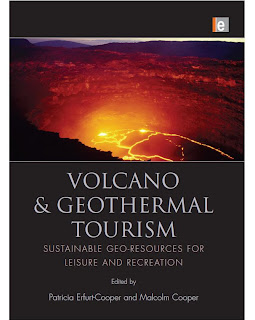
Free ebook : Volcano & Geothermal Tourism

Volcano & Geothermal Tourism
This book presents a first collection of chapters looking more closely at a tourism sector that includes travelling to volcanic and geothermal destinations as part of the new quest for sustainable tourism. Volcano tourism is particularly popular in combination with recreational activities such as skiing, hiking, trekking, climbing and visiting hot springs, as well as many other outdoor activities(Erfurt-Cooper and Cooper, 2009), and with the need for the strengthening of attitudes and practices relating to environmentally sound tourism. edited by : Patricia Erfurt-Cooper and Malcolm Cooper 
File size : 9Mb

Wednesday, 7 July 2010

TOP 10 Deadly Volcanoes Eruption in History

Volcanoes , in history have a big relation for us as a humankind . We had known the earth surfaces is basically surrounded by water , and the rest off it , is an island , the place for human kind to live. In every island , there is a giant cone surfaces, mostly high from the others , we often know it as a mountain.

So many people lived near the mountain, and the history was recorded, more than a thousand people was die by eruption, gas , ashes ,rock , lava and the others material . And there are came from inside the "VOLCANO...".


Here they are , the most deadly volcanoes eruption in history ......


Number 10: LAKAGIGAR (ICELAND) 1783-1784.
In a word, the accumulation of miseries, originating in the volcanic eruption, was so dreadful, that, in the short space of two years, not fewer than 9.336 human beings, 28.000 horses, 11.461 head of cattle, and 190.488 sheep perished on the island!


Number 9: KELUD (INDONESIA) 1586.
The 1586 eruption produced one of the worst lava in the historical record of volcanic eruptions and took the lives of about 10.000 people. Extensive works to control lavas have been achieved around the volcano. A system of drainage of the Crater Lake was completed in 1926 .


Number 8: UNZEN (JAPAN) 1972.
The collapse of one of Mount Unzen's domes in 1972 resulted in a tsunami and became the most deadly volcano-related disaster in the history of Japan. 15.000 Japanese died because of that event


Number 7: ETNA (ITALY) 1169.
This mount was showed his strength , more than 15.000 people died in 1169.


Number 6: VESUVIUS (ITALY) 0079.
More than 18.000 people died ( imagining on 0079 C , How big the explosion unless 18000 people had die ? ).This mountain has erupted more than 50 times since the eruption in 79 A.D., when it buried Pompeii and its sister city, Herculaneum. After Pompeii was buried and lost to history, the volcano continued to erupt every 100 years until about 1037 A.D., when it entered a 600-year period of quiescence. In 1631, the volcano killed an additional 4000 unsuspecting inhabitants. It was during the restoration after this eruption that workers discovered the ruins of Pompeii, buried and forgotten for nearly 1600 years. It would take another 300 years for the excavations to reveal the story of Pompeii and Herculaneum


Number 5: ETNA (ITALY) 1669.
The most violent eruption in the history of Mount Etna occurred in March of 1669. On the first day, lava flows cut a smoldering gash out of two mountain villages. The volcano did not stop there, however. It continued to spew forth-molten rock for days on end, and by the end of April, the city walls of Catania had succumbed and the western side of the city was demolished before the lava mercifully came to a stop. In this disaster 20.000 people died.


Number 4: NEVADO DEL RUIZ (COLOMBIA) 1985.
On November 13, 1985, a small eruption produced an enormous lahar that buried and desolated the town of Armero in Tolima Department, causing an estimated 23,000 deaths. This event later became known as the Armero tragedy—the deadliest lahar in recorded history. Similar but less deadly incidents occurred in 1595 and 1845, consisting of a small explosive eruption followed by a large lahar.

Number 3: PELEE (MARTINIQUE) 1902.
At about 7:50 a.m. on May 8, the volcano erupted with a deafening roar. A large black cloud composed of superheated gas, ash and rock rolled headlong down the south flank of Mt. Pelée at more than 100 miles per hour, its path directed by the V-shaped notch at the summit. In less than one minute it struck St. Pierre with hurricane force. The blast was powerful enough to carry a three-ton statue sixteen meters from its mount. One-meter-thick masonary walls were blown into rubble and support girders were mangled into twisted strands of metal. The searing heat of the cloud ignited huge bonfires. Thousands of barrels of rum stored in the city's warehouses exploded, sending rivers of the flaming liquid through the streets and into the sea. The cloud continued to advanced over the harbor where it destroyed at least twenty ships anchored offshore. The hurricane force of the blast capsized the steamship Grappler, and its scorching heat set ablaze the American sailing ship Roraima, killing most of her passengers and crew. The Roraima had the misfortune of arriving only a few hours before the eruption. Those on on board could only watch in horror as the cloud descended on them after annihilating the city of St. Pierre. Of the ~28,000 people in St. Pierre, there were only two known survivors.


Number 2: KRAKATAU (INDONESIA)1883.
The horrifying eruption triggered the wave of Pair Sea as high as 40 meters and turned approximately 165 villages upside down as well as killed approximately 36,417 people that were all along the Lampung Gulf and the West Coast Banten. The Guinness Book of Record recorded as the biggest explosion that had been printed in the history of modern humankind.

( get free ebook for Krakatoa )


THE MOST DEADLY ERUPTION IN RECORDED HISTORY......

1.TAMBORA (INDONESIA) 1815.
With an estimated ejecta volume of 160 cubic kilometers, Tambora's 1815 outburst was the largest volcanic eruption in recorded history. The explosion was heard on Sumatra island (more than 2,000 km (1,200 mil away). Heavy volcanic ash falls were observed as far away as Borneo, Sulawesi, Java and Maluku islands. Most deaths from the eruption were from starvation and disease, as the eruptive fallout ruined agricultural productivity in the local region. The death toll was at least 71,000 people (the most deadly eruption in recorded history), of whom 11,000–12,000 were killed directly by the eruption; the often-cited figure of 92,000 people killed is believed to be overestimated.The eruption created global climate anomalies that included the phenomenon known as "volcanic winter": 1816 became known as the "Year Without a Summer" because of the effect on North American and European weather. Agricultural crops failed and livestock died in much of the Northern Hemisphere, resulting in the worst famine of the 19th century.


At least besides the lost because of those disaster , volcano provided so much material which use to reduce the effect of global warming at present. Their activity bring the eruption cloud to reduce the glass effect from the sun light . That is called " The Nature Works".

Sunday, 4 July 2010

Betawi's culture at SETU BABAKAN

Do you need some culture appreciation for refreshing both of vacation and exploring Betawi's culture with your family in Jakarta ? There is a place would be gathering your needs , it's called "Setu Babakan" . This place is allocate in south Jakarta , at Jagakarsa region (Pusat Perkampungan Betawi Setu Babakan, Srengseng sawah, Kecamatan Jagakarsa, Jakarta Selatan,Indonesia). This place is also known as "Betawi Culture village". As a village , we will shown by traditional betawi's home near and side by side when we entering this village. This village provide much of Betawi's culture , such as traditional foods , traditional dancing , or water trip in the lake of Setu Babakan (Setu = lake).


The extent of the township region of 289 hectares is located in two natural lakes, ie lakes Babakan and lake Mango Bolong. Not only limited to pleasing to the eye by lake, this lake have been entertaining visitors for fishing, canoeing and bicycle water sports. Both of lakes was surrounded by fruit trees shade which is the typical of Betawi like a lute, starfruit, sapodilla, papaya, banana, guava and jackfruit. The trees itself also surrounding the house of local people. There can also be found the homes have spacious terraces, a single story, the average house built with wood. The house consists of living room, family room and private rooms. A typical large terrace Betawi house which is usually used for receiving guests and the gathering of the house.


Traditional foods.
Betawi as a culture , had alot of traditional foods which taste and delicious are very interesting to try . One of the famous Betawi traditional foods is "Kerak telor", This is an unique traditional of Betawi foods , some other of Betawi traditional food is "Laksa","Toge goreng","Tahu gejrot" and many more. You can find these traditional foods in Setu Babakan area . For one kind of this food , you can buy it only less from One Dollars.


Traditional dancing.
There are so many Betawi tradition dancing played at Setu Babakan , mostly on weekends. There were a huge stage to perform these action , so we can enjoyed it for free . This action perform Betawi's traditional dance , such as "Tari topeng", "Tari cokek","Marawis","lenong","Tanjidor","Gambang Kromong", and even "Ondel-Ondel". And every weekends it had different dances type to shows. Playing at 14.00WIB until 17.00WIB. Enjoying your days with valuable culture !


Water trip .
Lake of Setu Babakan provides another water trip to played . Swan's boat is the most likely for the local tourist to play , and the other is cano . we can enjoy it for one dollars for one trip.


Take a few hours from your time to explore Jakarta mostly ethnic. Beautiful place , beautiful culture , and many more we can find in this place .Enjoy the trip and have fun time .

Friday, 15 January 2010

Embassies of Indonesia


Australia
Indonesia embassy address on Canberra
8 Darwin Avenue, Yarralumla A.C.T. 2600
Canberra, Australia
(P.O.BOX 616 Kingston 26)
Phone : (61-02) 6250.8600
Fax : (61-02) 6273.6017, 6273.3545
E Mail : indonemb@kbri-canberra.org.au
Web link : www.kbri-canberra.org.au" rel="nofollow"

Indonesia consulate general address on Melbourne (Consulate General)
72 Queens Road, Victoria 3004
Melbourne,, Australia
Phone : (61-3) 9525.2755
Fax : (61-3) 9525.1588
E Mail : kjrimelb@iaccess.com.au
Web link : www.kjri-melbourne.org

Indonesia consulate general address on Sydney
236-238 Maroubra Road
Maroubra Sydney NSW 203, Australia
Phone : (61-2) 93449933
Fax : (61-2) 93496854
E Mail : protocol@indonsyd.org.au
Web link : http://www.indonesianconsulatesydney.org.au/


Indonesia consulate general address on Perth
131 Adelaide Terrace East Perth, WA 6002
Perth, Australia
(P.O.BOX 6683 East Perth)
Phone : (61-08) 9221.5858
Fax : (61-08) 9221.5688
Web link : http://www.kri-perth.org.au/

South Africa
Indonesia embassy address
949 Schoeman Street, Arcadia
Pretoria 0028
http://www.indonesia-pretoria.org.za

United State of America (USA)
2020 Massachusetts Ave. N.W.
Washington, D.C. 20036
http://www.embassyofindonesia.org

Bangladesh
Road No. 53, Plot No. 14, Gulshan 2
Dhaka 1212

Netherlands
Tobias Asserlaan 8
2517 TC Den Haag
http://www.indonesia.nl

Great Britain
38, Grosvenor Square
London W1X 9AD

Brunei Darussalam
Lot. 4498, Simpang 528, Kampung Sungai Hanching Baru, Jalan Muara
Bandar Seri Begawan BC 2115, Negara Brunei Darussalam
(P.O.BOX 3013 BSB)
Phone : (673-2) 330-180, 330-358, 330-361, 330-445
Fax : (673-2) 330-646
E Mail : kbribsb@brunet.bn
Web link : http://www.indonesia.org.bn/


Czech Republic
Nad Budankami 11/7
150.00 Praha-5

Fiji
6th Fl, Ra Marama Building, 91 Gordon St
PO Box 878, Suva

Philippines
185 Salcedo St, Legaspi Village
Makati City, Metro Manila, the Philippines
P.O. Box 1671 MCPO
http://www.kbrimanila.org.ph

India
50 A, Canakyapuri
New Delhi 110021

Iran
Ghaemmagham Farahani Ave., No. 210.
PO Box: 11365/456 Teheran

Japan
Tokyo (Embassy)
5-2-9 Highashi Gotanda, Shinagawa-Ku
Tokyo 141, Japan
(P.O.BOX 11365/4564)
Phone : (81-3) 3441-4201
Fax : (81-3) 3447-1697
Web : www.indonesian-embassy.or.jp/

Osaka (Consulate General)
Daiwa Bank Semba Building 6th Floor 4-21 Minami Semba 4-Chome Chuo-Ku
Osaka 542.008, Japan
Phone : (81-06) 6252-9825 to 28, 252-9871
Fax : (81-06) 252-9872
E Mail : kjrioska@osk.3web.ne.jp
Web : www.kjriosaka.com


Germany
Lehrter Str. 16-17
10557 Berlin

Malaysia
233, Jalan Tun Razak
Kuala Lumpur 50400

Egypt
13, Aisha El Taimouria Street, Garden City
Cairo, Egypt
(P.O.BOX 1661 CAIRO)
Phone : (20-2) 794.7200, 794.7209
Fax : (20-2) 796.2495
E Mail : pwkcairo@access.com.eg
Web (underconstruction): www.kbri-cairo.org.eg

Peru
Av. Javier Prado Oeste 1890 esq. Los Castanos 181,
San Isdiro, Lima - Peru

New Zealand
70 Glen Road, Kelburn
P.O.Box 3543
Wellington

Singapore
7 Chatsworth Road,
Singapore 249761
info@kbrisingapura.com
http://www.kbrisingapura.com

Sweden
Sysslomansgatan 18, 1tr, 112 41 Stockholm
Box 12520, 102 29 Stockholm
subidpen@indonesiskaambassaden.se
http://www.indonesiskaambassaden.se

Thailand
600-602 Pecthburi Road
Ratchatewi, Bangkok 10400

Vatican
Piazzale Roberto Ardigo 42
00142, Roma

Zimbabwe
3, Duthie Avenue, Belgravia
Harare

Saturday, 13 June 2009

Ijen Crater (2,300m)

"The biggest Kaldera in Indonesia"Ijen crater is an active one which is combination of Mt. Raung and Mt. Ijen. There are two main routes leading to the crater. The first route is from Banyuwangi to the south -west through Jambu village. By mini bus from Banyuwangi , we go to Licin village and by another mini bus go to Jambu village , as the last village .

From the Jambu village , we start trekking by passing Coffee and Clove Plantation along the way to a splendid tropical forest. This way is used daily by the workers to carry sulfur stores from ijen crater, so the path is quite wide and good . In the middle of the journey, we will find cold water from a small river . It will takes 4 hours before getting st a prairie . There are three locked huts and some water from rain. We need 1 and half hours to reach to the crater . On the way , there is a small office managing sulfur mining , in which we can buy drinks or cigarettes.


The second route is from Bondowoso to south east passing Wonosari and Ijen Kaldera which is the biggest Kaldera in Indonesia. From Bondowoso , just straight to wonosari - sukosari and continued to sempol. Sempol is the nearest village to Ijen Crater and there is no inn there.
We will takes 5 hours passing beautiful savanna , to reach the three locked huts above from sempol . We cant rent a car from Wonosari or Sempol to go to Pal Tuding to minimized time as mini bus rarely passes there. It will spend another 2 hours , trekking from Pal Tuding to the three locked huts.

Here are some tips if you plan a visit to Ijen Crater.

 1. transportation
Transportation from Surabaya or Denpasar, Bali could by road to the town of Bondowoso. Estimated travel from Surabaya to Bondowoso about seven hours using public transport bus at a cost of Rp 50,000. While from Denpasar to Banyuwangi about four hours by public bus.

From Bondowoso or Banyuwangi to the late post named  Paltuding, it can be reached by renting a three-hour jeep adventure through damage road. If you are backpacking to Mount Ijen, from Terminal Bondowoso there a transportation to the village in Sempol district  with costs Rp 15,000. Then followed by a motorcycle trip to the post Paltuding for about Rp 40,000. While from Banyuwangi you have to ride transit to village at a cost of Rp 10,000 to the District Licin first and then travel can be resumed by ride of a sulfur truck  to the post Paltuding with only at a cost of Rp 5,000 per person.


2. lodging

In Paltuding end post there a simple inn run by the Ministry of Forestry, and cost for room is Rp 100,000 per night or three-bedroom villa at Rp 500,000 per night. From here you can live up to the crater of Mount Ijen and wait for the morning.If you want more comfortable stay at the guest house owned by PTP, you can choose to stay at the Plantation Belawan and Jampit with prices starting at Rp 135.000 per room per night. But from these two estates, you have to hire a vehicle to post Paltuding for a distance of six kilometers up the mountain.


3. the best time

The best time to visit Mount Ijen is in the dry season from July to September. In the rainy season is very dangerous to climb because the road was slippery. The best time to climb the mountain at 05 000 until 06.00 am in the morning because the sun has not shone bright and a long way to go up and down the mountain about four hours for casual walkers. Scenery in the morning as well as many more beautiful mountains and the fog has not smell vapor of sulfur.Do not forget to bring a thick jacket, hat, neck scarf and sneakers and another gear up to the mountain. Flashlights are also necessary if you want to leave at dawn to the crater.
Ijen Crater forms a lake with boiling light green color water whose sides strongly blows sulfuric gas . Ijen Crater is one of the most fascinating panoramas in Java island.
 
Copyright 2010 All About Indonesia Raya. All rights reserved.
Themes by Ex Templates Blogger Templates l Home Recordings l Studio Rekaman